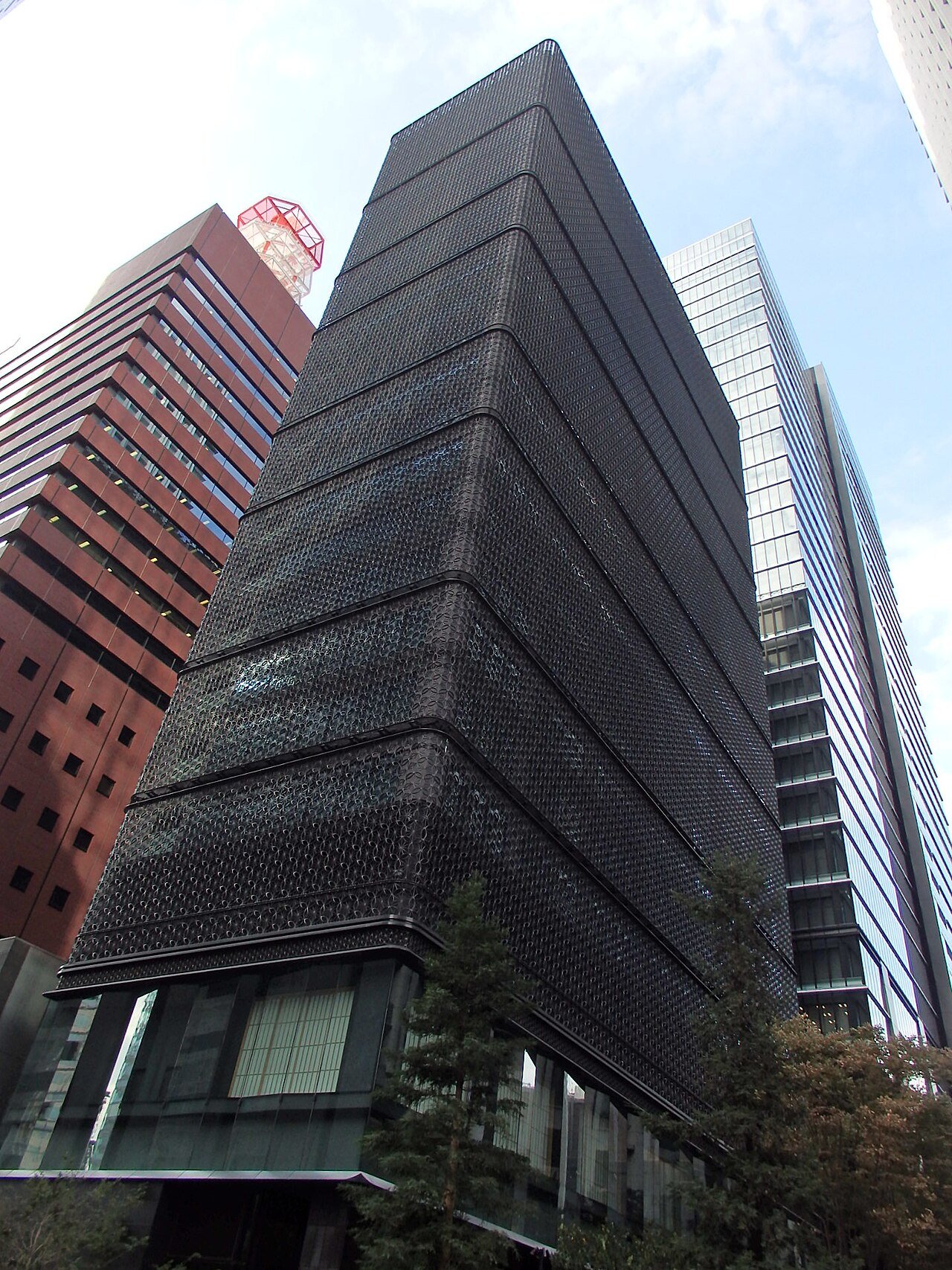
Every other guide on this site is a hunt for a specific window. This one is different, and we think it's worth saying plainly: HOSHINOYA Tokyo was not designed to hand you the Imperial Palace or Mount Fuji through the glass. The whole building is wrapped in an ornamental metal lattice, and what you see when you slide the screens open is Ōtemachi's office towers2 — not a landmark, not a skyline sweep. If a booked-and-guaranteed view is the point of your trip, this isn't that hotel. If an extraordinary room is the point, keep reading.
HOSHINOYA Tokyo is Hoshino Resorts' modern ryokan in the middle of the Otemachi business district: tatami floors, shoes left at the door, and a hot-spring bath on the roof, inside a tower wrapped in a metal screen based on a traditional kimono pattern.
This hotel was never meant to hand you a view. The screen filters the city into soft light, and the experience faces inward, towards calm. That's the honest answer, and the point: come here for the ryokan, not the panorama.
What the facade actually does
The building's entire exterior is cased in a metal screen based on an Edo Komon pattern — the fine repeating motif traditionally stamped on kimono fabric3. Behind it, each window is fitted with a sliding shoji screen. Guests can open the shoji to "see the surrounding skyscrapers," or leave them closed for what one reviewer called "the cocoon-like feeling of a ryokan in the hinterlands"2. In daylight, sun through the lattice throws patterned shadows across the tatami floor — arguably the room's real view, and it's on the ceiling and floor, not out the window4.
The three room types
The property has 14 guest-room floors, each run as its own self-contained ryokan of six rooms around a shared tatami lounge (ochanoma)1:
- Kiku (Executive Triple) — the largest room, about 80m², and the one to know: it's a corner room, positioned at the end of each floor1. A corner means glass on two sides instead of one — more lattice-filtered light, not a different view.
- Yuri (Deluxe King) — around 45m², bamboo-and-chestnut furnishings, thick paper screens1.
- Sakura (Deluxe Twin) — around 45m², positioned nearer the shared ochanoma lounge rather than a corner1.
HOSHINOYA runs an early-morning kenjutsu (samurai swordsmanship) session on a neighbouring building's helipad, and guests who've done it describe "360-degree views" with Tokyo Skytree and Tokyo Tower both on display4. That panoramic skyline exists at this address — it's just a scheduled activity on a rooftop, not something any guest room window delivers. Same pattern as a couple of Paris hotels in this series where the marketed view turns out to live in the rooftop bar, not the room.
How to think about booking
- Book Kiku if you want the most window frontage and space — not because it faces anything in particular.
- Don't request a "view room" here; the hotel doesn't sell one, and no source we found ties any category to the Imperial Palace, Mount Fuji, or a skyline panorama from the window.
- If a landmark view from the bed is non-negotiable for your stay, this guide's honest answer is: choose a different Tokyo hotel for that, and come here for the design and the onsen instead.
The hotel
We have no photograph of HOSHINOYA Tokyo that we are free to show you. We will not borrow a hotel's marketing images, and we will not lift them from a review site — we ask contributors to promise they haven't, so we don't either. If you have stayed here, you can fix this page better than we can: share your room and your own photograph.